Do you need a pool compliance certificate to sell a house in NSW?
Not necessarily a certificate of compliance, but one of three documents, plus a registration certificate. The NSW owner obligations page says the contract for sale includes a registration certificate issued from the Swimming Pool Register, plus one of these: an occupation certificate issued within the last 3 years, a valid certificate of compliance, or a certificate of non-compliance. If the documents are missing, the page says the purchaser may rescind the contract within 14 days of exchange, unless settlement has occurred. A seller with a failing fence may therefore still be able to sell with a certificate of non-compliance, and the page says the buyer then has 90 days from settlement to fix the defects, with the exception noted in the table.
| Situation | What the NSW owner page says |
|---|---|
| Selling | The contract includes a registration certificate from the Swimming Pool Register, plus an occupation certificate issued within the last 3 years, a valid certificate of compliance, or a certificate of non-compliance |
| Documents missing | The purchaser may rescind within 14 days of exchange, unless settlement has occurred |
| Certificate of non-compliance | The purchaser has 90 days from settlement to fix the defects, unless the certificate states the pool poses a significant risk to public safety |
| Sale rules do not apply | Strata or community lots in schemes of more than 2 lots, and off-the-plan sales |
| Renting | The landlord or real estate agent must give the tenant a copy of the certificate of compliance |
| Renting with a non-compliance certificate | A certificate of non-compliance cannot be used to rent |
| Lease rules do not apply | Strata or community lots in schemes of more than two lots |
The page was last updated on 16 March 2026. Read it before you exchange, and ask a conveyancer or solicitor how the rules apply to your contract. This site cannot.
Certificate of compliance and certificate of non-compliance
A certificate of compliance is issued by the council or a registered certifier when the barrier meets the requirements. The note to clause 19 of the Swimming Pools Regulation 2018 says it is valid for 3 years from the date of issue. A certificate of non-compliance records that the barrier did not meet them. Clause 21 says it remains valid for 1 year and is not valid at any time the premises are under a residential tenancy agreement. Its job in a sale is to let an owner sell a pool that fails and pass the fixing to the buyer, within the 90 days. Neither certificate is a licence. Each is a record of what an inspector found on a given day. The inspections page explains validity and who inspects.
The Register and the registration certificate
All swimming pool and spa owners must register on the Swimming Pool Register, and registration does not mean the pool complies. The updated Register launched on 16 March 2026, and the Building Commission NSW announcement says pools and spas are no longer registered under an owner's personal details, so registration is tied to the property address. The owner page of the Register describes a six-step flow: an email, a link, four questions, a checklist, an inspection and a form to complete, which ends in a registration certificate. Wagga council says the pool must be on the Register before a certificate of compliance can be issued, so register before you list the house.
What the Wagga council page adds
The council's certificate application page says to apply online after completing the safety checklist and fixing any issues, that a fee is payable, and that re-inspection may attract an additional fee. For a sale it says that if the pool or fencing is not compliant a certificate of non-compliance must be supplied, and the buyer must obtain a certificate within 90 days of gaining ownership. For a new pool, it says a valid occupation certificate and evidence of registration can be attached. The Regulation caps what a council may charge for inspections. The compliance page sets out the application steps and the caps, with the reminder to check the current Regulation and the council's fees and charges.
A Wagga council news article about the rules starting on 29 April 2016, on a page dated 2018, describes the same sale and rent documents: see the council news article. It gives no penalty figures here, and we give none.
Another council says the same, with one gap
Another NSW council's page on selling or leasing a property with a pool lists the same three documents and the same 90 days after settlement. It does not mention the 14-day rescission. We say so once: the 14-day rule is on the NSW owner page and not on that one, which is a reason to read the NSW page and not rely on a council summary.
Renting a house with a pool
For a lease, the landlord or agent gives the tenant a copy of the certificate of compliance. A certificate of non-compliance cannot be used to rent, and the Regulation says it is not valid while the premises are under a residential tenancy agreement. The page says the lease rules do not apply to strata or community lots in schemes of more than two lots. A landlord with an ageing fence may need it inspected and, if it fails, fixed. Ask your agent what they need from you. Landlords in older inner suburbs will find local notes on the Tolland, Mount Austin and Turvey Park page.
If the fence will not pass
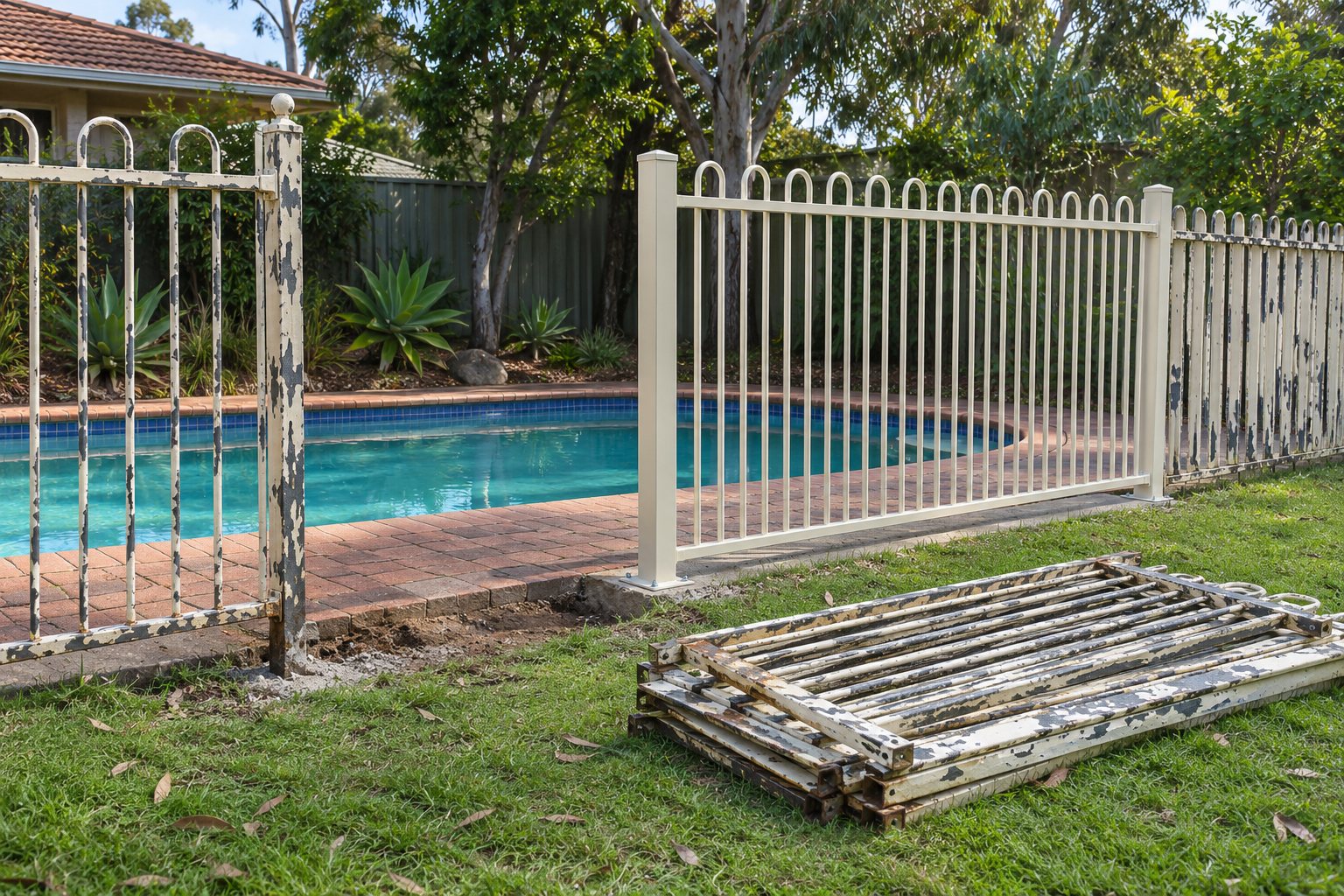
Two paths are open to a seller, and this site recommends neither. One is to fix or replace the fence first and sell with a certificate of compliance. The other is to sell with a certificate of non-compliance and leave the fixing to the buyer. Which is better is a decision for you, your agent and your conveyancer. The repairs page covers a fault on a sound fence, and the replacement and upgrades page covers renewing it. Licensing depends on the type and value of the work. The regulator pages we found do not say which category covers fitting or repairing a pool fence, so ask the contractor which licence or registration they hold. Which edition of AS 1926.1 a certifier applies is a separate open question, set out on the height, gaps and gates page. For the wider Wagga picture, see the Central, East, South and North Wagga page.
What a rules page cannot do
It cannot tell you what your contract needs, whether your pool is registered, or whether your fence would pass. It reports what the NSW owner page, the Regulation, the Wagga council pages and another council's page say, and those pages can change. It cannot give legal advice on a sale or a lease. The council or a registered certifier decides whether a barrier complies, and a conveyancer or solicitor can tell you how the sale rules apply to your contract.
Check the current rules before you rely on this
This page describes the pool documents NSW pages say a sale or lease needs, and the certificates of compliance and non-compliance. It describes the rules in general terms as they stood in November 2026. Standards, forms, thresholds and fines change.
The authoritative sources are NSW Government, owning a pool or spa: your obligations (updated 16 March 2026), Another NSW council, selling or leasing a property with a pool (corroborates the sale and lease documents), Wagga Wagga City Council, apply for a swimming pool certificate of compliance, Wagga Wagga City Council news, new pool safety and registration requirements from 29 April 2016 (page dated 2018), Swimming Pools Regulation 2018 (NSW), version in force 30 June 2024 and Building Commission NSW, an improved Swimming Pool Register has launched (16 March 2026). Where anything here differs from those sources, they are right and we are not.
We are not pool fencing contractors, certifiers, builders, regulators or lawyers. For what applies to your pool, ask Wagga Wagga City Council or your certifier which rules and which edition of the standard apply, ask the contractor which licence or registration they hold, and ask Building Commission NSW if you are unsure about licensing.
Accurate at the time of writing, November 2026. Always check the source before relying on it.